
Source: CNN, INTUITIVE MACHINES, NASA, NASA TV Embargo: NONE Footage Type: PKG TRT: 01:42


Source: CNN, INTUITIVE MACHINES, NASA, NASA TV Embargo: NONE Footage Type: PKG TRT: 01:42

Originally Published: 22 FEB 24 14:51 ET
By Erin Christy , Jennifer Maupin
Click here for updates on this story
TULSA, Oklahoma (KJRH) — Black cowboys played a major role in the settling and shaping of the American West.
In honor of Black History Month, 2 News talked to twin brothers from Tulsa who’ve spent their entire lives making sure that part of history is told while being successful rodeo cowboys for many years.
Being a cowboy was Ronnie and Donnie Stephens’ childhood dream.
“When I was a kid, I would draw pictures of guys I knew who roped, and I would draw a horse here and a rodeo area in the back and said my brother and I are going to have a place like this someday when I walk in the backyard,” Donnie said.
And that’s exactly what they did. Three years after graduating high school, the Stephens bought land in north Tulsa and built a barn and an arena. For 10 years, they held twice-a-year rodeos, packing the place.
“My mother, she used to run concession, it was a family affair,” Ronnie said. “My daddy was the gate man for people who came to the gate.”
Being Tulsa firefighters, the schedule allowed the Stephens to travel across the country to compete in rodeos — collecting prize money, championships, and countless stories. Theirs is chronicled in a chapter of the bestselling book “Black Cowboys of Rodeo.”
But it’s the story of others the Stephens take pride in telling most.
For years, they went to classes and taught children about the legacy and contributions of Black cowboys. They said it’s important for Black children to know a third of the cowboys in the Wild West were Black. This is important to them because knowing history means knowing and understanding others and their struggles.
“I remember Jim Crow laws,” Donnie said. “I remember when we couldn’t go to Bell’s Amusement Park as a kid. It’s a gut shot. It’s not a good feeling to not have equal representation in anything you do.”
Black cowboy rodeos began when Black people either weren’t allowed in certain rodeos — or wouldn’t want to be a part of them.
“Back then, a lot of top hands that should have made the finals, they just didn’t get scored right, or they got cheated on the times,” Donnie said.
Ronnie recalls a time, even in the 90s, at a rodeo in Bixby, where instead of leaving with prize money, he left with a police escort.
“I won first place,” Ronnie said. “They had some excuse, ‘you did this’, they just lie to you about it and you know, you was right, but they didn’t give me the money.”
The Stephens said progress has been made, and education is key. This month, they were honored as living legends by the National Cowboy and Western Heritage Museum.
Donnie said of their accomplishments — he’d like to be remembered as a helper for future generations of cowboys.
“When I would try to learn, it was hard to get people to show you how to do things, so when I got knowledge, I tried to educate people, and I think that’s what made me a better cowboy,” he said.
The Stephens are the epitome of success because, as Donnie said after the mic was off, as a kid, he played firefighter and cowboy.
So, as an adult, he didn’t work a day in his life.
The Stephens said during their presentations to kids, while they focused on western history, they also let them try roping and also incorporated messages about staying in school and staying away from gangs and drugs.
Please note: This content carries a strict local market embargo. If you share the same market as the contributor of this article, you may not use it on any platform.
The-CNN-Wire
™ & © 2024 Cable News Network, Inc., a Warner Bros. Discovery Company. All rights reserved.

Embargo: Tulsa, OK; **This image is for use with this specific article only** Black cowboys played a major role in the settling and shaping of the American West.
KJRH via CNN Newsource
22 Feb 24

Originally Published: 22 FEB 24 16:35 ET
By Kiara Hay
Click here for updates on this story
DETROIT (WXYZ) — Tiff Massey is a multi-faceted, interdisplinary artist in the city of Detroit.
Massey uses wood, metal, fabric and music as a form of expression and communication.
“If you show me how to do something once, I can replicate it. I can build it. I can make it,” Massey said.
Massey has been making masterpieces in the city and beyond for more than a decade.
Her latest work will be unveiled at the DIA in May — making her the youngest Black artist to have their own exhibition.
The name, ‘7 Mile and Livernois,’ which is where she grew up.
Also known as the “Avenue of Fashion,” Livernois represents Detroit’s unique style and is a constant feed of inspiration.
“Everything we do is a lot of beauty in it. How we adorn ourselves, our language, our food,” she said. “And, our history. “
With stories woven into each piece, like Massey’s series called ‘Some Fabrics Hold Weight.’
“Gingham was originally utilized as a pattern to clothe the enslaved on plantations so they can be seen in the fields,” Massey said.
Now, reclaiming the material, Massey replaces the white squares with Kente fabric, a traditional fabric of the Ashanti from present-day Ghana.
“This is about paying homage to little Black girls and when we get our hair done this is our first adornment,” Massey said.
The installation is called ‘I Remember Way Back When.’
Part of the beauty of Massey’s work is that it triggers nostalgia as it pushes the needle forward while highlighting significant cultural references.
“A sista has been working hard,” Massey proclaimed.
And it’s paying off.
Please note: This content carries a strict local market embargo. If you share the same market as the contributor of this article, you may not use it on any platform.
The-CNN-Wire
™ & © 2024 Cable News Network, Inc., a Warner Bros. Discovery Company. All rights reserved.

Embargo: Detroit, MI; **This image is for use with this specific article only** Tiff Massey is a multi-faceted, interdisplinary artist in the city of Detroit.
WXYZ via CNN Newsource
22 Feb 24

Originally Published: 22 FEB 24 10:15 ET
By Chandelis Duster and Kaitlyn Schwanemann, CNN
(CNN) — Nelva Williamson has been a teacher in Houston for more than 40 years. Two years ago, she began teaching AP African American studies and Williamson told CNN during her lectures she can see her students have “lightbulb moments.”
“I teach that [African Americans] did not start enslaved. There’s greatness in African kingdoms,” Williamson said. She said that students feel uplifted when they learn about Black history predating racial oppression in the United States.
Williamson said the class is empowering for her students, who are predominantly Black and brown girls.
But she’s also teaching AP African American Studies amid a nationwide debates over how topics like race, racism and sexuality are taught in American classrooms.
According to a new survey published Thursday by the Pew Research Center, 41% of teachers surveyed said these nationwide debates have had a negative impact on their ability to do their job.
What’s more, a majority of public K-12 teachers surveyed, 58%, said they feel their state governments have too much influence over what’s taught in public schools in their area.
And as the parental rights movement continues to gain momentum in some states, 60% of public K-12 teachers surveyed said parents should not be able to opt their children out of learning about racial inequality or racism, even if it conflicts with the parents’ beliefs.
Forty-eight percent of public K-12 teachers surveyed said parents should be allowed to opt out of lessons on gender identity or sexual orientation.
Williamson said she feels students should learn about race and racial inequality that has occurred throughout history within the context of the state standards.
“By opting out of these discussions, students are not learning the full depth and breadth of the history of this nation and the world,” Williamson told CNN. “To be opting out of that classroom discussion would be to put blinders on regarding the impact of race around the world.”
More than a third, 38%, of students ages 13 to 17 surveyed said they feel comfortable learning about racial inequality and racism in school. A smaller portion of surveyed teens, 29%, said they feel comfortable discussing sexual orientation or gender in class.
The survey also found that within the classroom, topics associated with racial inequality and racism come up more often than LGBTQ issues. A majority of teachers, 56%, said topics of racial inequality and racism at least “sometimes” came up in the classroom, while 21% said the topics came up “often or extremely often,” the report also said.
Aidan Lam, a Pennsylvania high school senior and youth ambassador for the It Gets Better project, a non-profit that services LGBT+ youth, told CNN that queer issues do not come up often in the classroom, but he appreciates when they do.
“Examining the sparse dialogue that does occur at my school, there is healthy debate surrounding both racial and queer issues. I think being exposed to both positive and negative opinions through classroom discussions has enriched my education,” Lam said.
As states like Florida implement laws banning lessons on sexuality and gender identity in classrooms, 68% percent of teachers surveyed who have been teaching longer than a year said gender identity and sexual orientation “rarely or never” came up in their classroom during the 2022-2023 school year, according to the report.
Forty-eight percent of teens surveyed said they should not learn about gender identity in school, the survey also found.
While, nearly half of teens surveyed, 48%, said they would prefer to learn about the legacy of slavery and how it “still affects the position of Black Americans today.”
A slightly smaller but significant percentage of teens, 40%, said they would rather learn that slavery is part of American history but no longer affects the position of Black people in America, according to the report.
Pew surveyed more than 2,500 public K-12 teachers in the US and more than 1,400 teens ages 13 to 17, according to the report. More than 5,000 adults were also surveyed.
Across the country, state lawmakers have introduced legislation to ban topics on sexual identity and race from being discussed in K-12 classrooms.
In 2023, at least 510 anti-LGBTQ bills were introduced in state legislatures across the US, many limiting access to healthcare and restricting what can be taught about sexuality and gender in classrooms.
In Florida, Gov. Ron DeSantis signed legislation banning certain instruction about sexual orientation and gender identity in the classroom in 2022. School districts and teachers across the state of Florida are also trying to navigate a slate of so-called “parental rights” laws that empower parents to have a greater say over what children learn in Florida classrooms.
During a news conference last week, Florida Gov. Ron DeSantis pushed back on allegations that there is movement in the state to ban books, arguing that “curating a book or not in a library for middle school kids is not the same as saying the book is banned.”
DeSantis also addressed recent backlash over some schools in the state issuing permission slips for students to attend Black History Month lessons. The governor accused the schools of “virtue signaling” and critics of “trying to create phony narratives.”
“You had this incident in Miami where they did some permission slip, it was absurd,” DeSantis said. “There’s nothing in the state that required that, the state board of education immediately wrote a letter to the principal that said, ‘knock it off, stop with the nonsense.’”
For her part, despite the fact that Gov. Greg Abbott signed a bill in 2021 cracking down on teaching so-called “critical race theory” in Texas schools, Williamson said her classroom hasn’t been politicized.
“We’re still teaching the TEKS as they have been for the past 10 years,” she said, referring to the state’s educational guidelines, or the Texas Essential Knowledge and Skills (TEKS).
“Nothing has changed,” Williamson said. “This is knowledge that needs to be out there, partly because it helps to give our students a sense of being in the history of this country.”
The-CNN-Wire
™ & © 2024 Cable News Network, Inc., a Warner Bros. Discovery Company. All rights reserved.

**This image is for use with this specific article only** More than a third of students surveyed said they feel comfortable learning about racial inequality and racism in school.
Kobus Louw/E+/Getty Images via CNN Newsource
22 Feb 24

Originally Published: 19 FEB 24 18:21 ET
Updated: 22 FEB 24 10:26 ET
By Ashley Strickland, CNN
Editor’s note: Sign up for CNN’s Wonder Theory science newsletter. Explore the universe with news on fascinating discoveries, scientific advancements and more.
(CNN) — A European Space Agency satellite reentered Earth’s atmosphere over the North Pacific Ocean between Alaska and Hawaii Wednesday afternoon and there have been no reports of damage, according to the agency.
The agency’s Space Debris Office, along with an international surveillance network, monitored and tracked the Earth-observing ERS-2 satellite throughout February to make predictions about the reentry, which occurred at 12:17 p.m. ET Wednesday. The ESA provided continuous live updates on its website.
At around 50 miles (80 kilometers) above Earth’s surface, the satellite broke apart due to atmospheric drag, and the majority of the fragments were expected to burn up in the atmosphere. The agency said it was possible that some fragments could reach the planet’s surface, but the pieces didn’t contain any harmful substances and likely fell into the ocean.
The exact time remained unclear even in the days leading up to reentry due to the unpredictability of solar activity, which can change the density of Earth’s atmosphere and how the atmosphere tugs on the satellite. As the sun nears its 11-year cycle’s peak, known as solar maximum, solar activity has been ramping up. Solar maximum is expected to occur later this year.
The sun’s increased activity already had an impact on speeding up the reentry of the ESA’s Aeolus satellite in July 2023.
The ERS-2 satellite had an estimated mass of 5,057 pounds (2,294 kilograms) after depleting its fuel, according to the agency.
“Uncontrolled Atmospheric reentry has long been a common method for disposing of space objects at the end of their mission,” said Tim Flohrer, head of the agency’s Space Debris Office, in a statement. “We see objects similar in size or larger to ERS-2 reentering the atmosphere multiple times each year.”
The Earth-observing ERS-2 satellite first launched on April 21, 1995, and it was the most sophisticated satellite of its kind at the time to be developed and launched by Europe.
Along with its twin, ERS-1, the satellite collected valuable data on the planet’s polar caps, oceans and land surfaces and observed disasters like flooding and earthquakes in remote areas. The data gathered by ERS-2 is still used today, according to the agency.
“The ERS satellites have provided a stream of data which has changed our view of the world in which we live,” said Simonetta Cheli, Director of the agency’s Earth Observation Programs, in a statement. “They have provided us with new insights on our planet, the chemistry of our atmosphere, the behavior of our oceans, and the effects of mankind’s activity on our environment – creating new opportunities for scientific research and applications.”
In 2011, the agency decided to end the satellite’s operations and deorbit it, rather than adding to the swirl of space junk orbiting the planet.
The satellite executed 66 deorbiting maneuvers in July and August of 2011 before the mission officially concluded later that year on September 11. The maneuvers burned through the rest of the satellite’s fuel and decreased its altitude, setting ERS-2’s orbit on a trajectory to slowly spiral closer to Earth and reenter the atmosphere within 15 years.
The chances of an individual person being injured by space debris each year are less than 1 in 100 billion, about 1.5 million times lower than the risk of being killed in an accident at home, according to the agency.
The-CNN-Wire
™ & © 2024 Cable News Network, Inc., a Warner Bros. Discovery Company. All rights reserved.

An artist’s illustration depicts the Earth-observing ERS-2 satellite in orbit. The satellite is expected to reenter and largely burn up in Earth’s atmosphere on Wednesday morning.
ESA via CNN Newsource
19 Feb 24

Originally Published: 22 FEB 24 10:52 ET
By Julia Avery
Click here for updates on this story
INDEPENDENCE, Missouri (KCTV) — The Independence teen who wears a size 23 shoe is finally comfortable thanks to the Kansas City community and one big-name celebrity.
Jor’el Bolden first sat down with KCTV 5 in January to discuss his struggle to find shoes.
To find a size 23, they would need custom-made shoes, which can cost more than a thousand dollars. Bolden’s mother, Tamika Neal, made a GoFundMe account to raise the money to buy her son shoes that didn’t hurt his feet.
After the story aired, Kansas City poured in donations. More than $11,000 so far.
“I’m overwhelmed and excited because [his foot size] is something I don’t have control over but as a parent not being able to provide something that your kid needs – it does something to you- so just having people reach out and pull through for us,” said Neal. “It was amazing.”
The story also garnered national attention.
“Entertainment Tonight, they messaged me and she was like ‘someone special wants to talk to you’,” Neal said.
That someone special was retired NBA Star, Shaquille O’Neal. Shaq wanted to speak with Bolden and send him a gift. He got the phone number and made a Facetime call.
“[Jor’el] didn’t have a shirt on,” Neal said. “I said, ‘I’m sorry he doesn’t have a shirt on’ and [Shaq] said ‘What’s up big sexy?’”
Less than a week later, three big boxes showed up at Bolden’s door.
“It’s better than Christmas morning, Santa didn’t send this, Shaq did,” Neal said.
The boxes were filled with new clothes, new shoes, as well as items from Shaq’s own closet.
Jor’els favorite shirt was the Papa John’s shirt from Shaq’s days doing commercials for the company.
The most important box was filled with nearly 20 pairs of shoes.
Shaq wears a 22 wide, which fits Jor’el better than a regular 22, but he says a 23 would be more comfortable.
“They are big help for now,” Neal said. “but he will need a bigger shoe eventually and that’s what this money is for.”
Jor’el said the money will help as he prepares for his future.
“Thank you for taking the time and the money that you have earned to give to me when I needed it,” Bolden said. “Thank you for all of the things that will come from it and that already have.”
As for Jor’el’s future, he, like Shaq, dreams of becoming a professional athlete saying he hopes to become a boxer someday.
Please note: This content carries a strict local market embargo. If you share the same market as the contributor of this article, you may not use it on any platform.
The-CNN-Wire
™ & © 2024 Cable News Network, Inc., a Warner Bros. Discovery Company. All rights reserved.
Originally Published: 22 FEB 24 10:05 ET
Updated: 22 FEB 24 10:55 ET
By Anna Bahney, CNN
Washington, DC (CNN) — Sales of existing homes in the US climbed in January, pushed up by buyers who were encouraged to make a purchase by falling mortgage rates. But the surge may be short-lived if rates extend a post-January climb.
Existing home sales (not newly-constructed homes) — which include single-family homes, townhomes, condominiums and co-ops — beat expectations, rising 3.1% in January from the prior month to a seasonally adjusted annualized rate of 4 million units, according to a report from the National Association of Realtors.
Compared to a year ago, when sales were at a 4.07 million pace, sales were down 1.7%.
“While home sales remain sizably lower than a couple of years ago, January’s monthly gain is the start of more supply and demand,” said Lawrence Yun, chief economist at NAR in a release. “Listings were modestly higher, and home buyers are taking advantage of lower mortgage rates compared to late last year.”
With a return of eager buyers to the market, the cost of homes also went up. The median cost for a home jumped 5.1% from a year ago to $379,100, the seventh straight month of annualized price gains. January is usually a sleepier month for home sales, but prices reached a record high for the month.
“Multiple offers are common on mid-priced homes, and many homes were still sold within a month,” said Yun. “The elevated share of cash deals — 32% — indicated a market full of multiple offers and propelled by record-high housing wealth.”
After reaching a high last year of 7.79%, the average rate for a 30-year, fixed-rate mortgage has dropped. The rate remained around 6.6% for more than a month, although it has been trending higher over the past few weeks.
In January the share of first-time home buyers dropped to 28%, falling under a healthy market share of 30%.
In addition to rising mortgage rates, elevated prices and still stubbornly low inventory levels, first-time homebuyers are facing steep competition from other buyers. Especially those coming with cash, which first time home buyers typically do not have.
January’s 32% of all cash buyers is the highest share in nearly a decade. These offers could be from current homeowners with record high home equity who are taking proceeds from a sale of their home in an expensive city like Boston and buying all cash in the Carolinas where the value of a home is lower, for example.
Whatever the source of cash, for first-time or middle-income buyers who have to use a mortgage, they are at a disadvantage, said Yun.
Another strong headwind for all homebuyers is that the price of homes is now increasing faster than wage growth, said Yun. For several months wage growth was outpacing home price growth, but that changed this month with home prices up 5.1% and wage growth up 4.5%.
“In the current environment it is unhealthy and we don’t want to see it,” said Yun. “But it is a testament to the housing shortage we see in the US.”
The inventory of homes for sale was up slightly in January rising 2% from December to 1.01 million units, and up 3.1% from one year ago. But Yun said it would take an inventory level of 1.5 million to really loosen up the market.
For now, adding to the inventory of existing homes is dependent upon mortgage rates. Homeowners with ultra low rates are unwilling to sell and buy a home during a time of higher prevailing market rates.
Yun said that while the broader employment picture drives long term housing demand – the job market remains robust, pushing demand for housing – it is mortgage rates that are a more important factor to determine the timing of home purchases.
And while a drop of rates in December and January boosted sales, rising rates may cool buyer’s interest even as the spring selling season is underway.
The-CNN-Wire
™ & © 2024 Cable News Network, Inc., a Warner Bros. Discovery Company. All rights reserved.

**This image is for use with this specific article only** Homes in Centreville, Maryland, US, on Tuesday, April 4, 2023.
Nathan Howard/Bloomberg/Getty Images via CNN Newsource
22 Feb 24

Originally Published: 21 FEB 24 16:52 ET
By Catherine Ross
Click here for updates on this story
MASSILLON, Ohio (WEWS) — A Northeast Ohio community is filling the gaps of its missing history. The Massillon Museum has been collecting, documenting and sharing untold African American stories.
The concept of “Missing History of Massillon: Unheard African Americans Stories” began in 2020 when widespread racial justice demonstrations encouraged Americans to confront racism.
“It was called to our attention where we absolutely had not shared enough Black stories, especially as it relates to Massillon history,” recalled Mandy Altimus Stahl, an archivist at the Massillon Museum.
Massillon, situated on the banks of the Tuscarawas River in Stark County, has been called “The City of Champions.”
“It’s always been a football town. We all know that,” laughed Alex Wood, who is back in his hometown after years of coaching on the collegiate and professional levels.
Football, which gained popularity as a pastime among the city’s factory workers in the 1890s, still inspires passion among its residents: from the miniature footballs placed in the cradles of newborns to the success of Massillon High School’s Tigers to the long list of professional athletes and coaches produced by the town.
“It had, obviously, a great deal of influence on me. I got the football too back in – well I won’t tell the year – but a long time ago. And I played here,” Wood said. “Now in my career, I’m a coach, I’m a football coach. Imagine that, huh?”
Where the town’s football heritage inspires pride, so too does its history.
“I’m still miffed and don’t understand why American history and African American history is not one in the same,” Wood said. “It should never be parsed out as being separate.”
One of the city’s more visible symbols of Massillon’s abolitionist history is a documented stop on the Underground Railroad. Visitors can tour the Spring Hill Historic Home settled by a Quaker family, and see the hidden stairway and attic room where they aided enslaved persons on their journeys to freedom.
“It’s a little easy to point to slavery and the Civil War and then point to the Civil Rights movement, but there’s so much more,” Altimus Stahl said of the city’s African American history.
In 2020, the Massillon Museum began combing through its own collections and seeking information and artifacts from the community to bolster its content related to Black history.
“There are so many amazing stories that people shared with us and that we were able to find even within our own archives,” said Altimus Stahl.
She showed Wood and News 5 several historic documents, including a set of manumission papers from a couple who moved to Massillon after purchasing their freedom in the 1830s. She also shared an 1865 copy of the Galveston Daily News published shortly after Juneteenth.
“[It was published] just a couple of days after everyone was finally informed that they were free a couple of years ago,” she told Wood.
“I can feel it, the relief that came over those folks’ faces,” Wood responded emotionally. “And then there’s a lot of other stuff that people had to deal with, even after that, to try to establish some normalcy, respect, dignity, still fight through the propaganda wars, false narratives… But you know what? To me, it’s inspirational because we’re still here standing 40.1 million strong.”
The museum has amassed more than 4,000 scans of historic documents and photos. Additionally, it conducted numerous interviews with living residents and city leaders. A 2022 exhibit has been immortalized with an online 3D experience.
“We all belong. And I think that’s our message,” said former Massillon Mayor Kathy Catazaro-Perry.
She joined a committee to help plan Massillon’s first city-run Black History Month event on Feb. 16, 2024.
“The more we include and accept and talk about our life’s history and where we have been and where we are going – I think that’s where accepting others, including others is so important,” Catazaro-Perry said.
Others who took part in the Missing History project agreed with the sentiment.
“It’s important to preserve those stories so that we know where we came from,” Altimus Stahl said. “What challenges did we face here in Massillon and how did we overcome them?”
Wood added, “It’s important for all folks to understand the history, everybody, because I think that brings about better understanding, more cooperation, more empathy towards other folks’ stories and I think that’s needed.”
Please note: This content carries a strict local market embargo. If you share the same market as the contributor of this article, you may not use it on any platform.
The-CNN-Wire
™ & © 2024 Cable News Network, Inc., a Warner Bros. Discovery Company. All rights reserved.
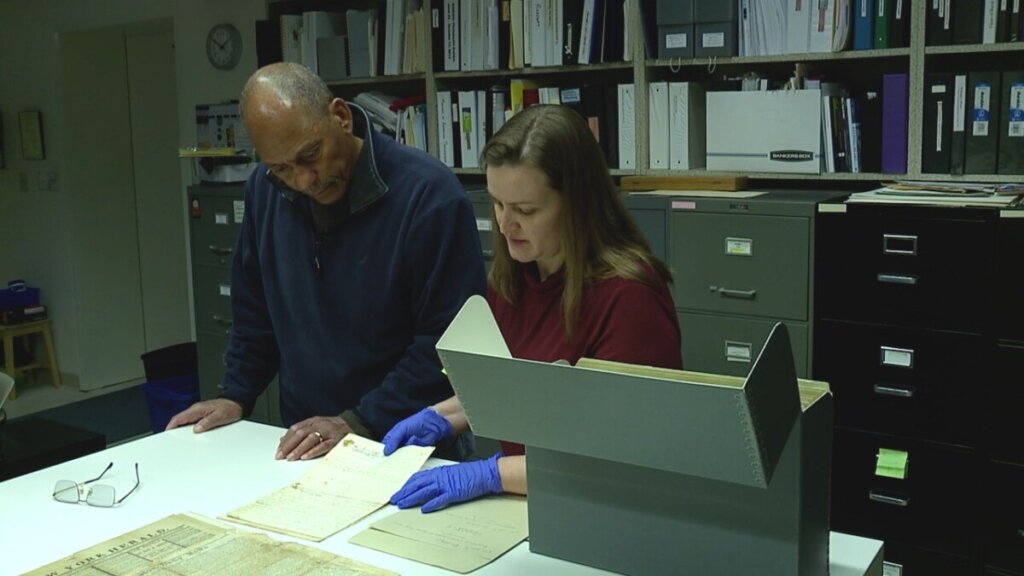
Embargo: Cleveland-Akron, OH; **This image is for use with this specific article only** A Northeast Ohio community is filling the gaps of its missing history. The Massillon Museum has been collecting, documenting and sharing untold African American stories.
WEWS via CNN Newsource
21 Feb 24

Originally Published: 21 FEB 24 15:02 ET
By Naomi Keitt
Click here for updates on this story
TULSA, Oklahoma (KJRH) — This Black History Month, 2 News Oklahoma looked at the disparity in Alzheimer’s cases among older Black Americans and one woman whose life mission is to help bring awareness.
For the last 20 years, Beverly Baul made it her goal to provide access to resources for Black families in the community.
“It was a beautiful moment,” said Baul.
Flipping through photo albums showing decades’ worth of memories, Baul geared up for her next big event to shine the light on a devastating diagnosis.
“They don’t know about the resources,” said Baul. “They don’t know what direction to go. A lot of time, caregivers don’t know exactly what is happening to their loved one.”
Baul is the executive director of Alzheimer’s Diversity Outreach Services. She said that education started with her own family.
“I’ve learned so much about my family history,” said Baul. “I’ve learned that it was on both sides of my family.”
From her aunt to her grandfather and, most recently, her younger sister, she’s dealt with the diagnosis firsthand. She’s uniquely positioned to provide care and support to other families.
“I feel good about being able to help families,” said Baul. “I know the journey they’re on.”
Alzheimer’s Diversity Outreach Services provides workshops, health fairs, and one-on-one consultations with people all over the country. Their biggest yearly event is Out of Africa: Healthy Brain Strategies.
With the Alzheimer’s Association saying older Black Americans are twice as likely as older whites to have Alzheimer’s, Baul uses this event as an annual summit bringing together caretakers, doctors, and families.
The goal is to show our community how to provide the best care.
“If they know, then they’ll know how to treat their loved one and what their loved one will need,” said Baul.
The event brought together thousands of people over the last 20 years.
Please note: This content carries a strict local market embargo. If you share the same market as the contributor of this article, you may not use it on any platform.
The-CNN-Wire
™ & © 2024 Cable News Network, Inc., a Warner Bros. Discovery Company. All rights reserved.
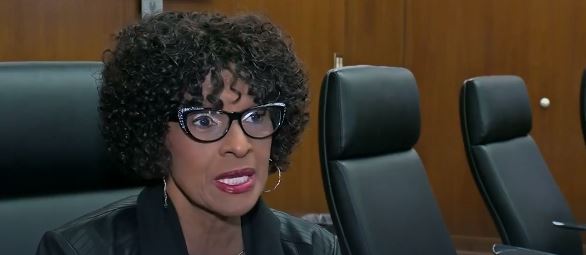
Embargo: Tulsa, OK; **This image is for use with this specific article only** For the last 20 years, Beverly Baul made it her goal to provide access to resources for Black families in the community.
KJRH via CNN Newsource
21 Feb 24

WV: Take a look inside Bluefield’s first Black hospital that was started by Dr. E.W. Lomax on Bland Street in 1916.

Source: WVVA Embargo: Bluefield-Beckley-Oak Hill, WV Footage Type: DONUT TRT: 02:33